Dispatch · Copper
The ALU was the hard part. The rest is 32-bit plumbing.
While fab runs, design slices that remain in the machine: writeback mux, bus arbitration, register file, memory, PC. Not a throwaway FSM.
I am pushing to design the remaining boards. I had assumed the most complicated one was the ALU — which is done and routed. Next is everything else: register file, memory, PC/stack, data bus, shift/mul-div. The ALU was the deep combinational problem. What is left is mostly 32-bit plumbing.
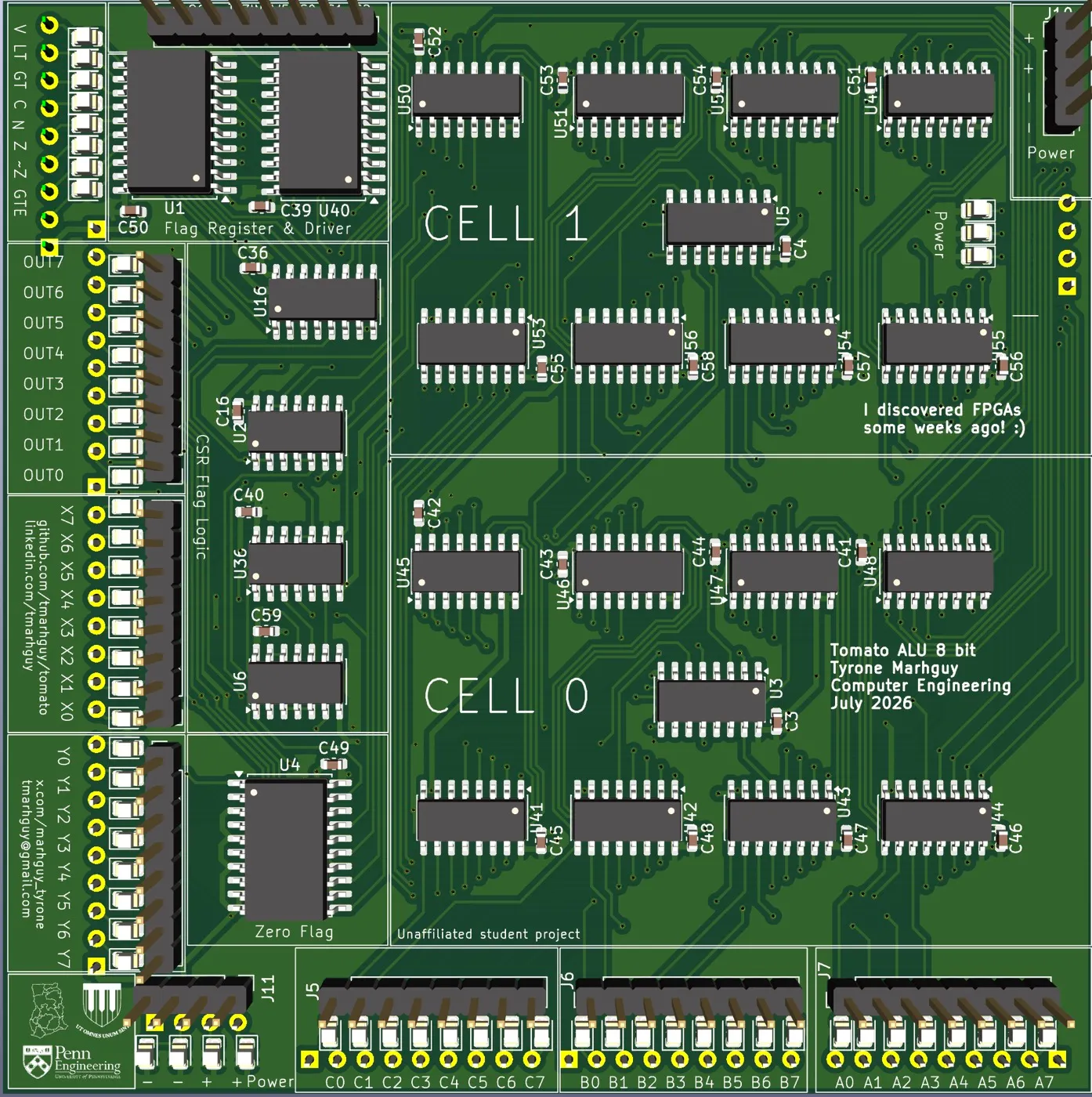
Fig. — ALU, done07_alu · the hard combinational slice
That is the plan from last week: while the ALU fab runs, design slices that ship in the final machine instead of a throwaway FSM.
The first slice is the multiplexers on the data path — writeback mux, bus arbitration, the glue that ties ALU, memory, and register ports onto one 32-bit highway. A naïve 32-bit mux bank costs hundreds of millimetres. Bus drivers on each contributor. Matched decode enables, one-hot, the same idea as the display scan. Digital already has the behaviour. The board work is making the fanout physically tolerable.
Contention on a shared tri-state bus is not theoretical. At bring-up clocks the overlap window is small. One active driver per bus. Finish the mux and driver plan on 06_data_bus first — it unblocks every other board that needs to read or write the shared word.
From the build
The work behind the words.
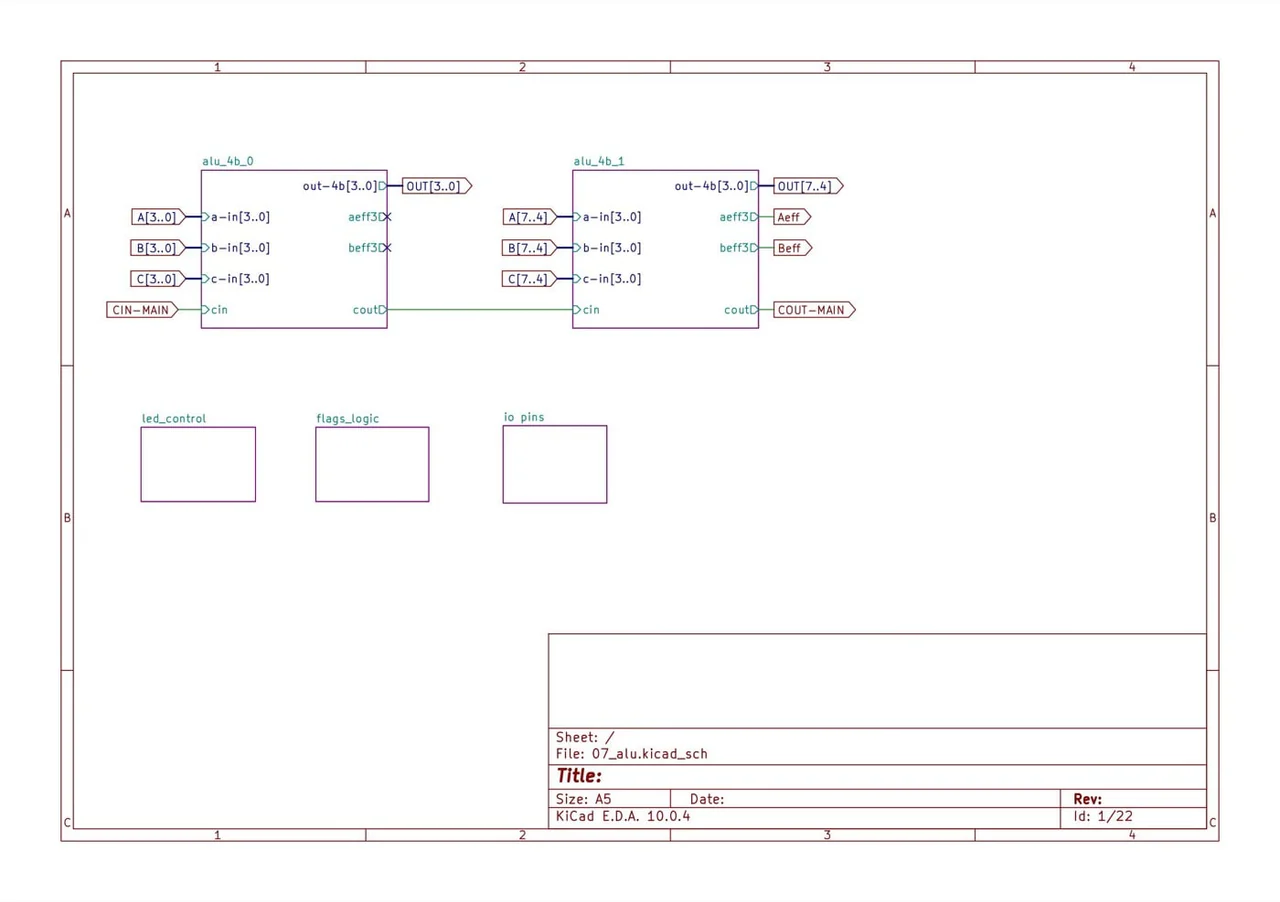
The ALU schematic behind the physical board.
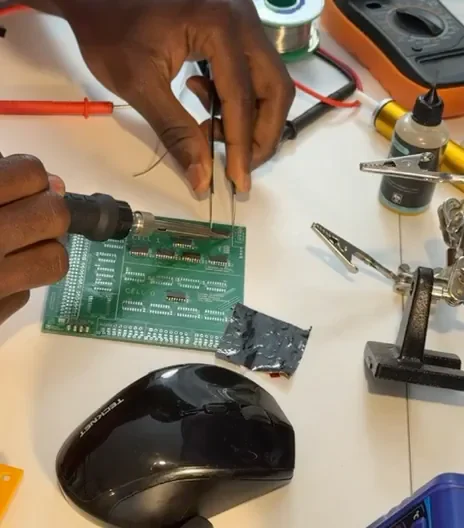
Assembly of the discrete ALU, one package at a time.