Dispatch · Architecture
The bottleneck was the instruction word, not the ALU.
Convention says a 32-bit machine gets a 32-bit instruction. That fit was always tight. No honest fourth register. Opcode and immediate fighting over the same bits. A 40-bit word was the proposed escape.
After roughly three months on Tomato32, the recurring bottleneck has been instruction width, not the ALU itself. Convention says a 32-bit machine gets a 32-bit instruction word. That fit was always tight: opcode, three register fields, and bank select fill 32 bits — with no room for a fourth operand, and the lower bits double-booked as immediate overlay.
The CPU was designed around a powerful ALU but forced to speak about it through a cramped encoding. alu_out = adder(f(a,b,c), g(a,b,c), carry_in). At the bit-slice that is hundreds of thousands of LUT programs. A 10-bit opcode indexes a thousand microcode rows. Matching every theoretical LUT pair to its own opcode was never the goal.
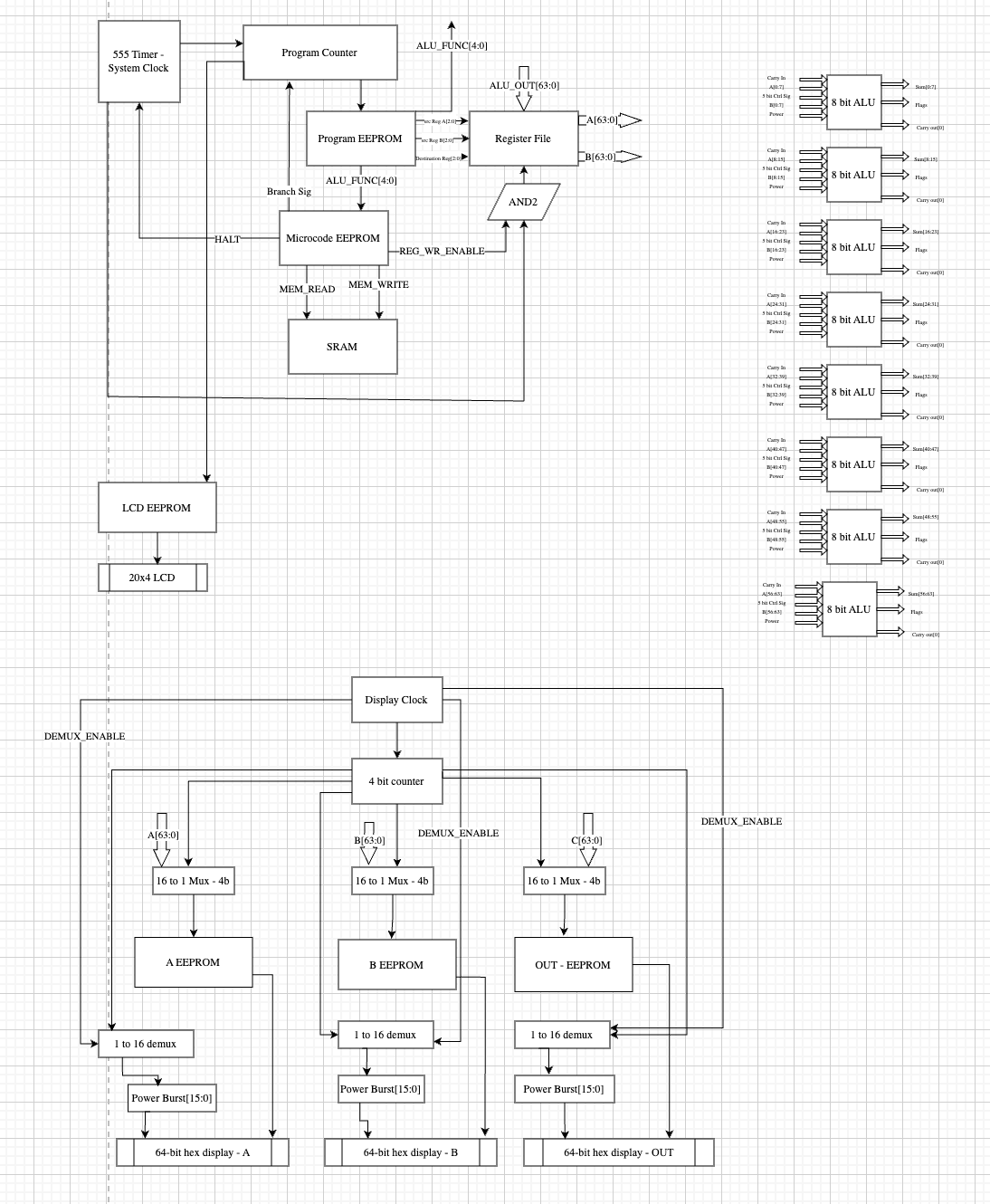
Fig. — The wide drawingBefore the word-width argument · paper machine
The real loss in the 32-bit design is narrower: no honest fourth register field — C was aliased to dest readback. Opcode space and immediate layout fighting over the same bits. Instruction word not equal to machine word.
This entry proposes the 40-bit escape. The next day's entry takes it back. Both belong in the vault. The argument is the point.
From the build
The work behind the words.
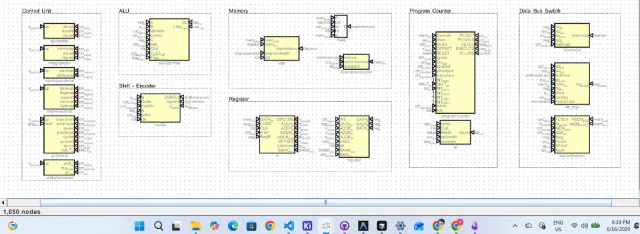
The modular control design documented in the build journal.